
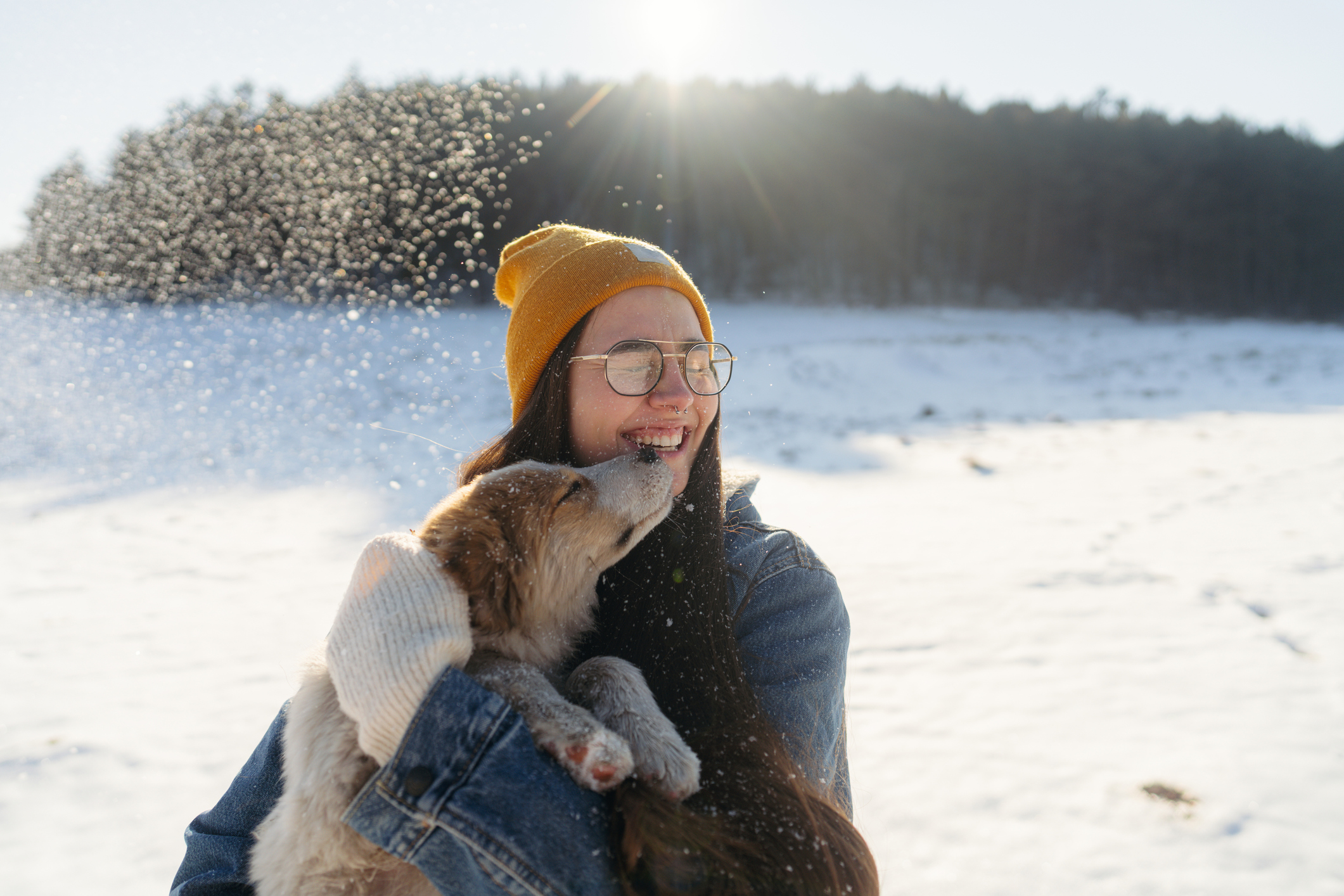
Dec 15, 2025 | By, For Pet's Sake
Winter wellness guide for healthy pets
As cold weather moves in and winter settles around us, it’s important to remember that pets feel the chill just like people do. Shorter days, icy sidewalks, salted roads, and freezing temperatures all pose extra challenges for dogs, cats, and other animals. But with a little mindful preparation and a few simple habits, you can help your furry friend stay cozy, safe, and healthy all winter long.
Adjust outdoor time and exercise for winter weather
Even in winter, pets need regular activity — but it’s important to adjust outings based on temperature, breed, age, and coat type. Shorter, more frequent walks are often safer than long outdoor sessions when conditions are cold or icy. Always keep dogs leashed, as snow can mask familiar scents and landmarks, increasing the risk of pets getting lost, especially when visibility is low. After each walk, thoroughly dry their fur, paws, and belly to help prevent hypothermia, and avoid leaving pets damp in a chilly house.
Protect paws and coat in harsh winter conditions
Winter sidewalks and salted roads can irritate or even injure your pet’s paw pads, so it’s important to wipe and dry their paws thoroughly after each walk. A gentle paw balm or pet-safe protector can help prevent cracking or soreness, and booties are a great option for pets who tolerate them. Avoid over-bathing during the winter months, as cold air and indoor heating can strip natural oils and lead to itchy, flaky skin. When a bath is needed, use a gentle, moisturizing shampoo and make sure your pet is fully dry before heading back outside. Lastly, avoid shaving your pet’s coat down to the skin during winter—their fur provides essential insulation, and if trimming is necessary, keep it minimal to help them retain warmth.
Provide warm, draft-free shelter and bedding
Make sure your pet’s sleeping area is warm, dry, and away from chilly drafts. Elevating their bed off cold floors and adding extra blankets can help trap warmth and boost comfort. For pets who spend a lot of time outdoors, be sure they have a well-insulated shelter that protects them from wind, moisture, and snow. Keeping it dry and draft-free is the goal. Short-haired breeds or pets who get cold easily may benefit from a cozy coat or sweater, and always make sure their bedding stays clean and dry.
Feed, hydrate and monitor health during the cold months
Pets burn more energy staying warm in the winter, so some may benefit from a slight increase in food or more frequent meals, especially those who spend most of their time outdoors. Always ensure they have access to fresh water, as cold weather can cause dehydration just as quickly as summer heat, and indoor heating can dry out their skin and coat. Watch for signs of discomfort such as shivering, lethargy, or cracked paw pads, particularly in puppies, seniors, and pets with existing health conditions. If you notice anything out of the ordinary, reach out to your veterinarian for guidance.
Watch for winter hazards: ice, salt, chemicals and antifreeze
Chemicals used on roads and sidewalks, like salt, de-icers, and antifreeze, can be toxic or irritating if ingested or if they stick to your pet’s paws. Wipe their paws thoroughly after walks and avoid using harmful de-icers around your home. Cold-weather chemicals and antifreeze leaks under cars are especially dangerous, so check driveways and keep pets away from vehicles. Be extra cautious around frozen bodies of water, as ice may appear solid but can be dangerously thin. Finally, keep your pet leashed and safely away from ponds, lakes, or frozen water to prevent accidents.
A little preparation goes a long way
Winter can be a wonderful season for pets to explore, play, and enjoy the crisp weather. With a little extra care for safe walks, thoughtful grooming, and seasonal adjustments, you can help your furry family members stay healthy, cozy, and happy throughout the coldest months.
From our team at For Pet’s Sake, here’s to a warm, safe, and joyful winter season spent together!